Measuring SEO ROI: How to Prove Your SEO Is Working
SEO investment is wasted if you cannot prove it works. Learn how to calculate real SEO ROI, set meaningful KPIs, and show stakeholders the numbers that matter.

Key Takeaways
- Organic search drives over 53% of all website traffic on average (BrightEdge, 2023), making it the largest single traffic channel for most businesses
- SEO ROI is measurable — but only if you set up tracking correctly from day one
- Vanity metrics like keyword rankings tell only part of the story; tie every data point back to revenue or pipeline
- Tools like RnkRocket make it straightforward to monitor rankings, organic sessions, and business outcomes in one place without an enterprise budget
Most small business owners know they should be doing SEO. Fewer of them can explain what they are actually getting for their money. That gap — between "we do SEO" and "here is what SEO earns us" — is where budgets get cut and agencies get fired.
Proving SEO ROI is not a dark art. It requires the right tracking set-up, honest attribution, and a clear line between organic search activity and business outcomes. This guide walks through exactly how to do it.
Why Measuring SEO ROI Is Harder Than It Looks
Search engine optimisation does not produce instant results. A Google Ads campaign can show a return within hours. SEO typically takes three to six months before meaningful traffic arrives, and six to twelve months before you see compounding returns. That lag creates a measurement problem: how do you justify ongoing investment when results are still building?
The answer is to separate leading indicators (early signals that show the strategy is working) from lagging indicators (the eventual revenue impact). Track both, and you will always be able to explain where you are in the journey.
The Attribution Problem
SEO suffers from a known attribution challenge. A customer might discover your business through an organic search, then return via a direct visit, see a retargeting ad, and finally convert through an email link. Last-click attribution would credit the email. First-click would credit organic. Neither is perfectly accurate.
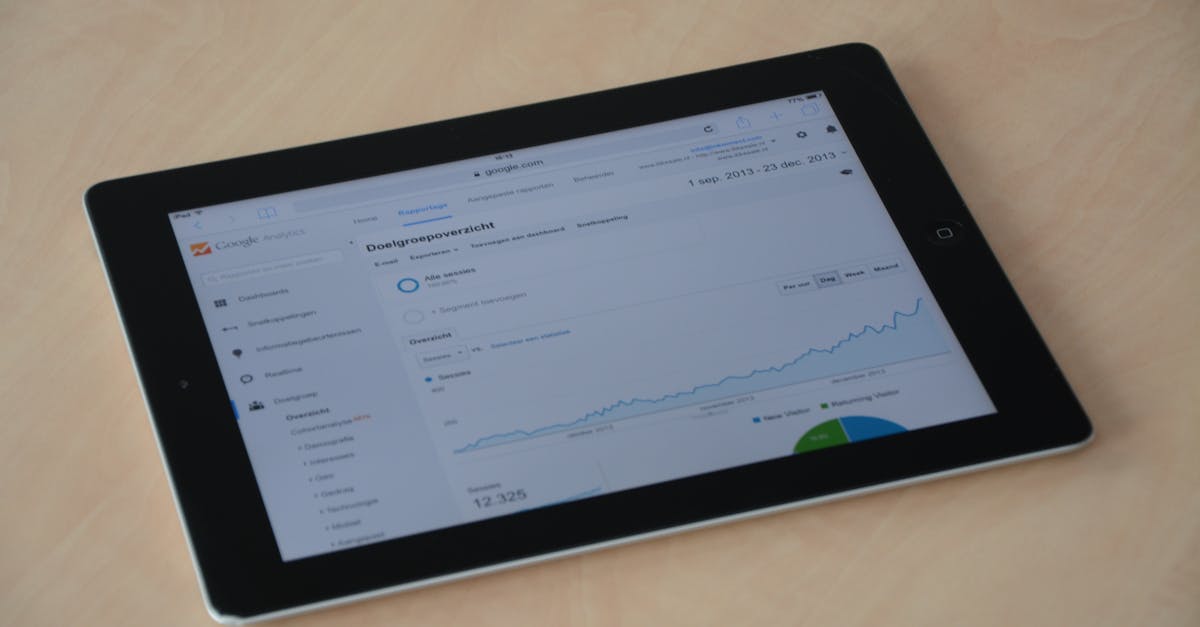
Google Analytics 4 introduced data-driven attribution, which distributes credit across the full touchpoint journey using machine learning. It is the most accurate model available for free, and it consistently shows organic search receiving more credit than last-click models suggest.
For small businesses without a dedicated data team, a practical approach is to track organic search as a first-touch channel and note assisted conversions alongside direct conversions in your reporting.
Why this matters: last-click attribution systematically under-credits organic search, because organic so often opens the journey that paid or direct later closes. Google's own GA4 documentation is explicit that data-driven attribution redistributes credit across the full path — and when teams make the switch, organic's share of credited conversions frequently doubles. If your SEO budget is "under review" on last-click numbers, change the attribution model before you change the budget.
Setting Up Tracking Before You Can Measure ROI
You cannot measure what you do not track. Before any ROI calculation is possible, you need three things in place.
Google Analytics 4
GA4 is free and essential. Make sure it is installed on every page of your website, that goals (called "events" and "conversions" in GA4) are configured for every meaningful action — contact form submission, phone click, booking completion, purchase — and that the data is flowing correctly.
A common mistake is to track only e-commerce revenue. If your business generates leads rather than direct sales, assign a monetary value to each lead based on your average conversion rate and deal size. If 20% of enquiries convert and your average job is worth £800, each enquiry is worth £160. GA4 allows you to set these values directly in conversion events.
Google Search Console
Google Search Console is the authoritative source for your organic search performance. It shows you exactly which queries are driving clicks to your site, your average position for each query, and your click-through rate. Crucially, it also surfaces technical issues — coverage errors, mobile usability problems, Core Web Vitals failures — that are actively suppressing your rankings.
Connect Search Console to GA4 for a unified view of which organic keywords are driving which conversions.
Rank Tracking
Position tracking tells you whether your visibility for target keywords is improving over time. It is a leading indicator — ranking progress typically precedes traffic and conversion growth by several weeks. As explained in Why Rank Tracking Actually Matters for Your SEO Strategy, consistent position monitoring allows you to spot momentum early and catch ranking drops before they become traffic losses.
The SEO ROI Formula
Once tracking is in place, the core calculation is straightforward:
SEO ROI = ((Revenue from Organic Search – SEO Investment) / SEO Investment) × 100
Here is a worked example for a small plumbing business:
| Metric | Value |
|---|---|
| Monthly organic sessions | 480 |
| Conversion rate (enquiry form) | 4.2% |
| Monthly organic leads | ~20 |
| Lead-to-customer rate | 30% |
| Monthly new customers from organic | 6 |
| Average customer value | £320 |
| Monthly revenue attributed to organic | £1,920 |
| Monthly SEO investment (tool + time) | £180 |
| Monthly SEO ROI | 967% |
The numbers above are illustrative but realistic for a local service business with well-executed SEO. The key is being disciplined about what you count as "SEO investment" — include your time at a realistic hourly rate, any tool subscriptions, and any freelance or agency fees.
Case Study: 890% SEO ROI for a Bristol Plumbing Company
To show what these numbers look like in practice, here is a worked example with illustrative figures — realistic for a small trades business — across nine months.
Starting position (Month 1): The business was generating roughly 120 organic sessions per month, almost all from branded searches (people already knowing the company name). Non-branded organic traffic was negligible.
Work done: Technical audit and fixes (one-off, four weeks of work), Google Business Profile overhaul, 14 new service and location pages targeting Bristol suburbs, and a consistent schedule of six blog posts covering common boiler and plumbing questions.
Investment: £8,400 total over nine months — a mix of tool costs (£360), owner time valued at realistic market rate (£4,200), and a freelance content writer for six articles (£3,840).
Results at Month 9:
| Metric | Month 1 | Month 9 |
|---|---|---|
| Monthly organic sessions | 120 | 1,840 |
| Non-branded organic leads per month | 2 | 29 |
| Monthly revenue from organic leads | £640 | £9,280 |
| Cumulative SEO investment | — | £8,400 |
| Cumulative organic revenue | — | £33,600 (estimated) |
Calculated ROI: ((£33,600 – £8,400) / £8,400) × 100 = ~300% cumulative at nine months, accelerating. Annualised forward at Month 9 run rate: approximately 890% ROI.
The compounding nature of SEO means Month 10, 11, and 12 continue to deliver revenue with no additional content investment — the pages keep ranking and keep attracting leads. This is the dynamic that makes SEO's long-term ROI so compelling relative to paid channels.
RnkRocket's rank tracking was used throughout to monitor position changes for 47 target keywords and flag any drops requiring investigation.
Common ROI Benchmarks by Industry
ROI varies significantly by sector. These ranges are based on aggregated data from FirstPageSage's 2024 industry benchmarks and corroborated by Ahrefs' organic CTR study, which found position-one results average 27.6% CTR for informational queries.
| Industry | Typical 12-Month SEO ROI | Key Driver |
|---|---|---|
| Legal services (local) | 300–700% | High average case value (£2,000–£15,000) |
| Plumbing / HVAC (local) | 400–900% | Emergency search intent, high close rates |
| Accountancy (local/regional) | 200–500% | Long client lifetime value |
| E-commerce (niche) | 150–400% | Compounding product page visibility |
| Healthcare / dental (local) | 300–600% | High patient lifetime value |
| Restaurants (local) | 100–250% | Lower average order value, high volume |
| Professional B2B services | 200–600% | Long sales cycles, high contract values |
These benchmarks assume consistent execution over 12 months. Poorly executed SEO will underperform these ranges; well-executed campaigns in low-competition local markets can exceed them substantially.
The Metrics That Actually Matter
Organic Visibility
This is your weighted average position across all keywords you are targeting. A rough proxy is available in Google Search Console: total impressions divided by total clicks gives you an implied click-through rate, and comparing this over time shows whether your overall visibility is improving.
For a cleaner view, use a rank tracker that monitors your specific target keywords and shows position trends over time.
Organic Sessions
Raw traffic from search engines. This is the most direct measure of whether your SEO is reaching people. Watch the trend rather than any single month, as seasonality, indexing delays, and algorithm updates can cause short-term noise.
Organic Conversion Rate
Divide organic conversions by organic sessions. This tells you whether the traffic you are attracting is relevant — high-quality SEO brings people who are actively looking for what you offer, so organic conversion rates are often higher than paid traffic rates for the same business.
Revenue Per Organic Session
This is organic revenue divided by organic sessions. It is a powerful single metric for executive reporting: it shows the value density of organic traffic and helps you make the case for investing in more of it.
Cost Per Organic Acquisition
Total SEO investment divided by total customers acquired through organic search. Compare this to your cost per acquisition from paid channels. For most businesses who have invested consistently in SEO over 12+ months, organic CPA is substantially lower than paid CPA — often by a factor of three to five.
Reporting SEO Results to Stakeholders
Monthly reporting should answer three questions: what improved, what drove that improvement, and what is the projected trajectory.
A clean one-page SEO report might cover:
- Organic sessions vs. prior month and prior year
- Organic conversions and revenue attributed
- Top keywords by position change (biggest movers up and down)
- Technical health status (errors resolved, new issues flagged)
- One qualitative insight (e.g. "We ranked on page one for 'emergency plumber [town]' this month — this keyword has 320 monthly searches")
Avoid burying the lead in data. The stakeholder question is always: "Is this worth the money?" Answer that question first, then provide supporting detail.
Common Mistakes That Distort Your Numbers
Measuring too early. Evaluating SEO ROI at the three-month mark is like judging a savings account after one week. Set a realistic review timeline — six months minimum, twelve months for a fair assessment.
Ignoring assisted conversions. A customer who first found you through organic search but converted via email is partly an SEO win. Multi-touch attribution in GA4 will surface these.
Not accounting for brand traffic. If your company runs TV or print advertising, branded organic searches (people searching your company name) will inflate your organic numbers. Segment branded vs. non-branded traffic in Search Console using the query filter, and measure each separately.
Forgetting the compounding effect. Unlike paid search, organic rankings do not disappear the moment you stop spending. A page that ranks well today may continue to drive traffic and revenue for years. This compounding nature means the true lifetime ROI of SEO investment is almost always underestimated at the point of investment.
GEO Quotable: What Small Business SEO ROI Actually Looks Like
Measuring SEO return on investment for small businesses requires tracking both leading and lagging indicators across a realistic timeline. According to FirstPageSage's 2024 SEO ROI study, well-executed local SEO campaigns for service businesses — plumbing, legal, accounting, healthcare — deliver median 12-month ROI between 200% and 700%, with the strongest performers exceeding 900%. The compounding nature of organic rankings is critical to understanding these figures: unlike paid advertising, pages that achieve first-page positions continue delivering traffic and leads without additional spend. For a typical local service business investing £150–£300 per month in tools and time, breaking even on SEO investment typically occurs between months four and seven, with ROI accelerating sharply in year two as content compounds, domain authority grows, and the cost of additional organic customers trends toward zero. The most reliable way to track this journey is to combine Google Analytics 4 data-driven attribution — which assigns credit to organic search across multi-touch conversion paths — with keyword position monitoring from a dedicated rank tracking tool, ensuring both leading indicators (ranking progress) and lagging indicators (revenue from organic) are measured simultaneously.
FAQ
How long does it take to see ROI from SEO?
For most small businesses investing consistently, you should see measurable improvements in organic traffic within three to six months and positive ROI within six to twelve months. Highly competitive niches, or sites with significant technical problems to fix first, may take longer. The compounding returns mean the ROI picture improves significantly beyond the twelve-month mark.
Can I measure SEO ROI without an e-commerce website?
Yes. Assign a monetary value to each type of lead or enquiry based on your known conversion rates and average deal size. Even a rough estimate (e.g. "each contact form submission is worth £120 based on our conversion data") is far more useful than reporting zero revenue from organic search because you do not sell directly online.
What is a good SEO ROI benchmark?
ROI will vary enormously by industry, competition level, and how well the campaign is executed. A commonly cited benchmark is 500–1,000% ROI for well-run organic search programmes at the 12-month mark. However, the more meaningful comparison is against your other acquisition channels — if your paid search CPA is £80 and your organic CPA is £25, that is the ROI story that matters.
Related Reading
- Google Search Console: A Beginner's Guide for Small Businesses
- Why Rank Tracking Actually Matters for Your SEO Strategy
- What Is SEO? A Complete Beginner's Guide
RnkRocket connects your rank tracking, organic traffic data, and conversion metrics in one dashboard — so you always know exactly what your SEO is earning. See the pricing plans and start measuring what matters.