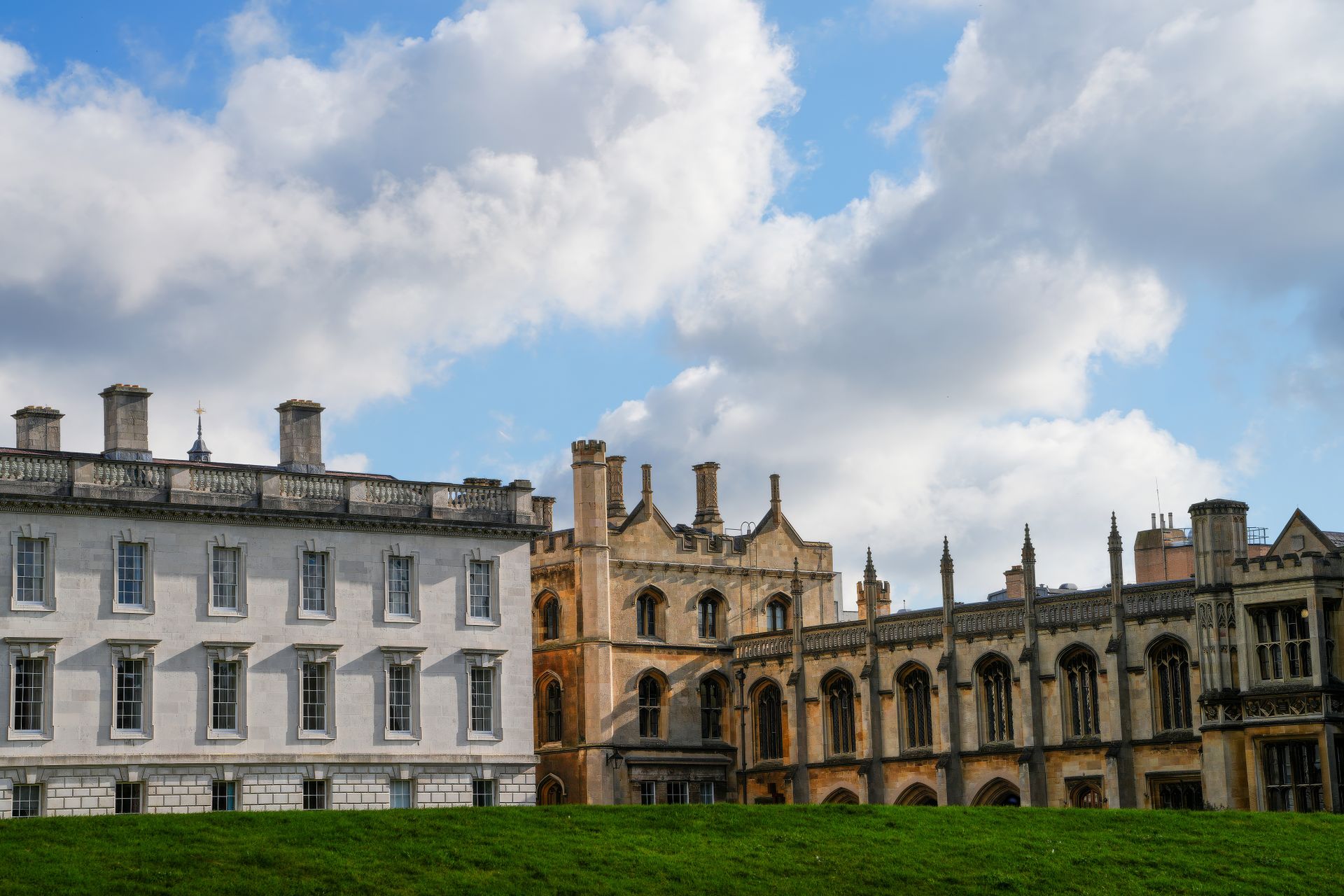
Cambridge operates as two economies layered on top of each other. The first is a historic university city with tourists, students, and the service businesses that support them — restaurants, hotels, punting companies, bookshops. The second is one of Europe's most concentrated technology and biotech clusters, anchored by the Cambridge Science Park, the Biomedical Campus at Addenbrooke's, and hundreds of startups and spinouts from the university. Both economies generate local search demand, but the keywords, competition levels, and customer intent are entirely different. A local SEO strategy for a Mill Road cafe has almost nothing in common with one for a biotech recruitment firm near the station.
The CB postcode area stretches from CB1 in the city centre to CB25 in Waterbeach and surrounding villages. Cambridge is compact compared to cities like Sheffield or Newcastle, but Google still localises results tightly. A restaurant ranking well in the city centre (CB2) may not appear for searchers in Cherry Hinton (CB1) or Girton (CB3). For trades, professional services, and hospitality businesses that serve the wider area, building location-specific content pages for each part of the CB postcode they cover is the most reliable way to expand visibility beyond their immediate neighbourhood.
£2.2bn
Biotech Cluster Value
Cambridge tourism generates substantial revenue and creates consistent year-round search demand. Unlike seaside resorts that spike in summer, Cambridge attracts visitors throughout the year — drawn by the colleges, Christmas markets, literary festivals, and the simple draw of a beautiful city. Terms like 'best restaurant Cambridge,' 'punting Cambridge price,' and 'things to do Cambridge today' carry steady search volume. For tourism and hospitality businesses, a well-optimised Google Business Profile is often the single highest-return marketing asset, determining whether they appear in the Local Pack when visitors search on their phones.
Silicon Fen creates a distinct B2B SEO opportunity that most Cambridge businesses overlook. Thousands of technology, biotech, and professional services firms operate within a few miles of the city centre, and the decision-makers in these firms search Google for suppliers, partners, and service providers. Keywords like 'IT support Cambridge,' 'patent attorney Cambridge,' and 'lab equipment supplier Cambridgeshire' carry high commercial value and relatively low competition compared to consumer terms. Businesses that target these terms with genuine, informative content build a pipeline of enquiries from exactly the kind of high-value clients they want.
CB1–CB25
Postcode Districts
The university brings roughly 24,000 students and 13,000 staff into the city, creating demand for accommodation, food, entertainment, and services that shifts with the academic calendar. Term-time searches for takeaways, tutoring, and student services in areas like Mill Road and Hills Road spike predictably, then drop during holidays. Businesses that align their content and keyword strategy with these cycles — rather than treating demand as constant — capture traffic that competitors miss.
Cambridge SEO agencies typically charge between £900 and £3,000 per month — reflecting the city's high cost base and affluent market. For the independent businesses that make up the majority of Cambridge's commercial landscape, that spend is hard to justify. RnkRocket provides the same core capabilities — weekly rank tracking, AI-powered site auditing, keyword research, and competitor analysis — for £9.95 per month. No contract, no agency markup, and full transparency into what is working.