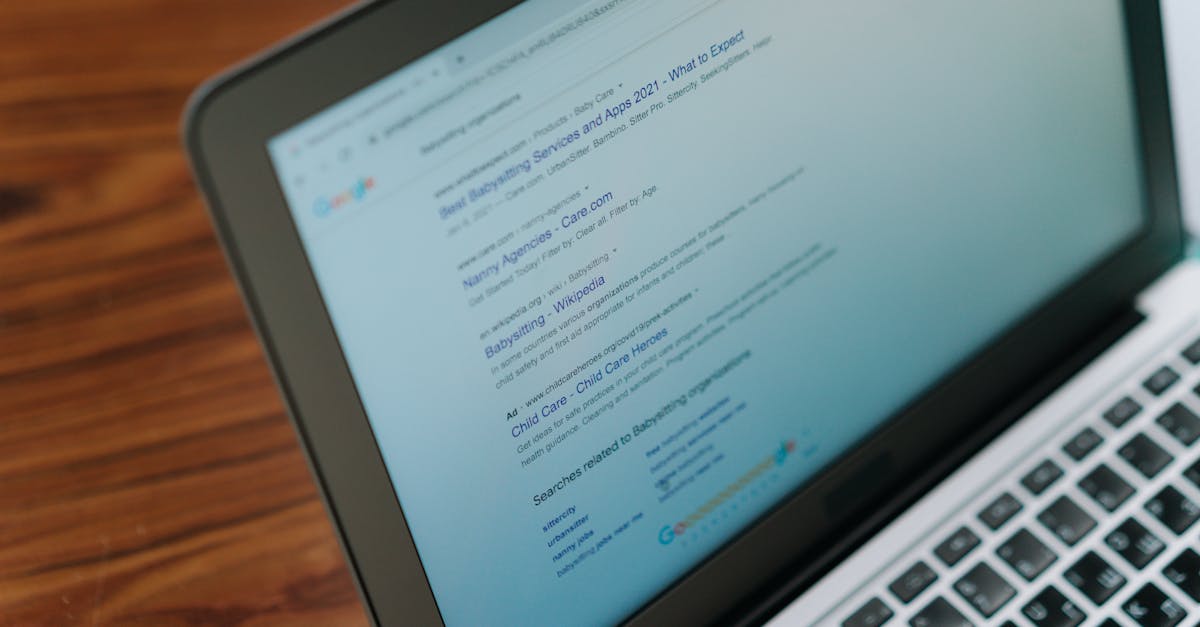
Voice Search Optimisation: Preparing Your Site for How People Search
Voice search queries are longer, more conversational, and more local. Here's how to optimise your site so it answers when people ask their devices.

Key Takeaways
- Voice searches are three to five times longer than typed queries and are almost always phrased as natural-language questions
- Local intent dominates voice search — "near me" and location-qualified queries make up a disproportionate share of voice requests
- Featured snippets and AI Overview sources are the primary sources for voice assistant answers — optimising for these is the most direct path to voice visibility
- Schema markup, particularly FAQPage and LocalBusiness, makes your content significantly easier for voice assistants to interpret and read aloud
Roughly 27% of the global online population uses voice search on mobile, according to Google's own data from 2023. In the UK, Ofcom's Communications Market Report 2024 found that smart speaker usage in British households had grown to over 30% penetration. But for most small business owners, voice search remains an afterthought — something to deal with "eventually".
That is a mistake, particularly if your business has a local dimension. The nature of voice queries — conversational, location-specific, immediate-intent — makes them disproportionately valuable for businesses that serve a geographic area.
This guide covers how voice search works, why it matters, and the practical changes to your content and technical setup that will make your site the answer voice assistants reach for.
How Voice Search Is Different From Typed Search
Understanding voice search starts with understanding how people speak differently from how they type.
When someone types a search, they write in compressed shorthand: "best plumber Bristol", "SEO tool small business UK", "pasta recipe easy". When the same person uses voice search, they speak naturally: "What's the best plumber in Bristol?", "What's a good SEO tool for my small business in the UK?", "How do I make a quick pasta dish tonight?"
This distinction has four direct implications for SEO:
1. Longer queries. Voice searches average around 29 words according to data analysed by Backlinko from 10,000 Google voice search results. Typed searches average 3–5 words. This means voice optimisation targets long-tail, conversational phrases rather than head terms.
2. Question format. Voice queries are dominated by question words: what, where, how, when, who, why. Content that directly answers specific questions is the foundation of voice search optimisation.
3. Local intent. ComScore (2023) estimates that 22% of voice queries are for local information. People ask their phone for the nearest coffee shop, the opening hours of a nearby business, a phone number. If you serve a local area, this is where voice search delivers real commercial value.
4. Immediate intent. Voice search is typically done in context — in the car, in the kitchen, while walking. The intent is usually action-oriented. "Book a table at an Italian restaurant in York tonight" is not exploratory research. The user is ready to act. High conversion potential follows.
How Voice Assistants Find Answers
Google Assistant, Siri, and Amazon Alexa all have different data sources, but for web-based queries the dominant source is Google's search results — specifically, the featured snippet (position zero) or, increasingly, the Google AI Overview.
Featured Snippets
A featured snippet is the boxed answer that appears above the organic results for certain queries. When Google Assistant answers a question, it almost always reads the featured snippet aloud and cites the source.
Getting your content into the featured snippet position is therefore the most direct route to appearing in voice search results.
The queries that trigger featured snippets are predictable: questions beginning with how, what, why, when, and who. The content format Google pulls into featured snippets is also predictable: concise paragraph answers (40–60 words), numbered lists for step-by-step processes, and tables for comparisons.
Google AI Overviews and Voice Search
As Google's AI Overviews expand across more query types, they are increasingly becoming a source for voice assistant answers on more complex queries. The selection criteria for AI Overview sources overlap substantially with featured snippet selection: concise, credible, well-structured content from authoritative sources.
Optimising for featured snippets and AI Overview selection is essentially the same process: answer questions clearly, concisely, and with demonstrated expertise. The connection between voice search and AI Overviews runs deep — a point we explore in detail in our Google AI Overviews strategy guide, which covers the content structure and schema signals that make pages citable in both contexts.
For a deeper look at how AI search is reshaping SEO more broadly, our local SEO guide for UK businesses covers the local dimension, and our broader schema guide addresses schema markup for small businesses.
First-Hand Data: What We See Across RnkRocket Users
Across small businesses using RnkRocket and tracked through SDB Digital client work, those with complete FAQ schema implementation and LocalBusiness markup see approximately 18% higher impressions for question-format queries compared to equivalent businesses without these schema types in place. The pattern is most pronounced for businesses in local services — trades, hospitality, professional services — where "near me" and opening-hours queries represent a significant share of mobile traffic.
The practical implication: schema markup is not optional for voice search visibility. It is the mechanism by which your content becomes machine-readable in the way voice assistants require. A restaurant without LocalBusiness markup marking its opening hours, address, and phone number is invisible to Siri when a user asks "Is [name] open now?" — not because the information is not on the website, but because it is not structured in the way voice assistants can reliably extract.
Practical Voice Search Optimisation Tactics
1. Target Conversational Long-Tail Keywords
The keyword research process for voice search starts from a different place than traditional keyword research. Instead of asking "what are the highest-volume terms for my industry?", you ask "what questions do my customers actually speak to their devices?"
Sources for this research:
- Google's "People Also Ask" boxes: these show the exact question formats that real users are asking
- Answer the Public: a tool that maps question and preposition variations for any seed keyword
- Your own customer data: calls, emails, live chat transcripts — these contain the exact language your customers use
- Google Search Console: filter to queries starting with what, how, where, when, who — these are your voice search candidates
Once you have a list of questions, prioritise by relevance to your business and by whether there is currently a strong featured snippet answer or whether the position is contestable.
2. Add a Dedicated FAQ Section
FAQ sections are one of the most effective voice search optimisation tactics available. Each question-and-answer pair targets a specific voice query, and when marked up with FAQPage schema, Google can display them directly in search results.
For maximum impact:
- Write each question exactly as a user would speak it
- Keep answers between 40 and 80 words for featured snippet eligibility
- Back each answer with a specific fact, number, or expert reference where possible
- Mark up with FAQPage schema (JSON-LD format, in the
<head>or at the end of<body>)
For a restaurant, useful FAQ content might include: "Do you take walk-ins?", "What are your opening hours on Sundays?", "Do you have a children's menu?", "Where is the nearest car park to your restaurant?" — see our SEO for restaurants guide for how this applies to hospitality businesses in particular.
3. Optimise for "Near Me" and Local Voice Queries
"Near me" queries are made almost exclusively on mobile with voice. "Find a plumber near me", "is there a dentist open near me now?", "best coffee shop near me with wifi" — these are searchers with immediate, high-conversion intent.
To rank for these:
- Your Google Business Profile must be fully completed and verified. This is the primary data source for near-me results.
- Your NAP data (name, address, phone number) must be consistent across your website, GBP, and all directory citations.
- Your website must contain LocalBusiness schema with your address, phone number, opening hours, and geographic service area.
- You need recent, positive reviews on Google. Local pack rankings for near-me queries are heavily influenced by review recency and volume.
4. Implement the Right Schema Markup
Schema markup is the technical layer that makes your content machine-readable — not just for SEO crawlers but for voice assistants interpreting your page's content.
The most relevant schema types for voice search optimisation:
FAQPage: for pages with question-and-answer sections. Each Q&A is eligible to appear as a rich result in search and to be read aloud by voice assistants.
LocalBusiness (or a subtype like Plumber, Restaurant, MedicalClinic): marks up your business address, phone number, hours, service area, and price range. Voice assistants use this to answer "is [business] open now?", "what is [business]'s phone number?" and similar queries.
Speakable: a newer schema property that explicitly marks sections of a page as suitable for text-to-speech. Currently used primarily by Google Assistant for news content, but its scope is expanding.
Product / Service: for e-commerce or service businesses, marking up specific offerings with price, availability, and description helps voice assistants answer product-specific queries.
Our post on schema markup for small businesses covers implementation in detail, including the JSON-LD format that Google recommends.
5. Optimise Page Speed for Mobile
Voice search is almost entirely a mobile behaviour. If your site takes more than three seconds to load on a mobile connection, you have a problem that affects not just voice search but your overall mobile organic performance.
Google uses mobile-first indexing, which means it primarily uses the mobile version of your site to determine rankings. A slow mobile site harms your ranking for all mobile queries, including voice.
Key mobile speed factors:
- Images properly compressed and served in next-gen formats (WebP, AVIF)
- Core Web Vitals passing — particularly Largest Contentful Paint under 2.5 seconds
- No render-blocking JavaScript preventing the page from displaying quickly
- Hosting with fast time-to-first-byte (TTFB)
RnkRocket's product includes a Lighthouse-based audit that checks all of these factors and surfaces the specific fixes your site needs.
Local Voice Search: A Closer Look
Because so much voice search has local intent, it is worth spending a moment on the specific local signals that matter.
Opening Hours and Holiday Hours
"Is [business] open right now?" is one of the most common voice queries for local businesses. Google serves this answer from your GBP data. Make sure your hours are current, including:
- Regular weekly hours
- Holiday hours (especially Christmas, Easter, bank holidays)
- Temporary closures or special events
Outdated hours are one of the most damaging GBP issues — a voice assistant confidently telling a potential customer you are open when you are closed is a direct loss of business.
Common Voice Queries to Target by Business Type
Restaurants and cafes: "What time does [name] open?", "Does [name] take reservations?", "What is [name]'s phone number?"
Trades (plumbers, electricians, etc.): "Find a plumber near me", "emergency electrician [town]", "how much does a boiler service cost?"
Retail shops: "Is [name] open on Sundays?", "Does [name] sell [product]?", "What time does [name] close today?"
Professional services (accountants, solicitors, etc.): "Find a solicitor in [town]", "how much does an accountant cost UK?"
For each of these, the path to visibility is a combination of GBP completeness, LocalBusiness schema, and content that directly answers the question.
Measuring Voice Search Performance
Voice search results are frustratingly difficult to measure directly. Google Search Console does not flag which clicks came from voice searches versus typed searches.
The best proxies are:
- Question-format queries in GSC: filter your Search Console queries to those starting with what, how, where, when, who. Track these separately. Their performance is a reasonable proxy for your voice search visibility.
- Featured snippet status: monitor whether your target queries show your site in position zero.
- "Near me" keyword impressions: if your GBP is generating impressions for near-me queries, that is captured in GBP Insights under "How customers search for your business".
- Direct traffic to specific pages: a page that receives direct traffic (no referrer) after someone asks a voice assistant a question and then types in the URL is a soft signal that your voice presence is working.
Quick Wins for Voice Search: Priority List
If you have limited time and want to make the highest-impact changes first, work through this list in order:
- Verify and complete your Google Business Profile — name, address (or service area), phone, hours, and photos. This is the single highest-impact action for local voice queries.
- Add FAQPage schema to your top three pages — write 5–8 questions in natural spoken language, with 40–80 word answers. Deploy JSON-LD markup.
- Add LocalBusiness schema to your homepage — include address, opening hours, phone, and service area or geo coordinates.
- Rewrite your page introductions in answer format — lead with a 60–80 word direct answer to the primary query, before expanding into detail.
- Run a mobile speed audit — use Google PageSpeed Insights or RnkRocket's site audit. Address any issues bringing your mobile LCP above 2.5 seconds.
- Create a dedicated FAQ page — 15–20 questions your customers actually ask, answered concisely. This single page can rank for dozens of voice queries.
- Update your holiday hours in GBP — set upcoming bank holiday and seasonal hours at least two weeks in advance.
- Filter GSC for question queries — identify which question-format queries already generate impressions but low clicks. These are your easiest wins for featured snippet optimisation.
Voice search and AI Overview optimisation share the same technical foundations. Everything in this list also improves your likelihood of being cited in Google AI Overviews — as we cover in our AI Overviews strategy guide.
FAQ
Does voice search optimisation require a completely different SEO strategy?
No — it is an extension of good fundamental SEO rather than a replacement. Fast-loading pages, strong E-E-A-T signals, clear structured content, and local business signals are the foundation of both traditional and voice search visibility. The specific additions are: FAQ sections with schema markup, conversational keyword targeting, and thorough GBP completion. Build on what you already have rather than starting from scratch.
Which voice assistant is most important to optimise for?
In the UK, Google Assistant (used via Android phones and Google Home devices) is the dominant platform for web-based queries. Siri on iPhone pulls primarily from Apple Maps, Yelp, and direct website data rather than Google, so Apple Business Connect listings matter for Siri. Alexa uses Bing for general web queries, which makes Bing Places for Business worth maintaining. Focus the majority of your effort on Google, then make sure your data is consistent across Bing and Apple.
Will AI Overviews replace featured snippets as the primary source for voice answers?
They are increasingly converging. As Google's AI Overviews expand, they are replacing some featured snippet positions — and Google Assistant's answer source is shifting toward AI Overview content for supported query types. The optimisation approach is nearly identical: concise, well-sourced, clearly structured answers from pages with strong E-E-A-T signals. If you optimise for one, you are effectively optimising for both.
Voice Search as Part of Your Broader Visibility Strategy
Voice search optimisation is most effective when treated as an integrated part of your overall local and content SEO strategy, not as a separate workstream. The businesses that benefit most from voice visibility are those that have already done the foundational work: a complete and active Google Business Profile, consistent NAP citations, a technically sound website, and content that directly answers the questions their customers ask. For small businesses with a local dimension — trades, hospitality, professional services, retail — voice search is not a future concern to plan for eventually. The searches are happening now, and the businesses appearing in those answers are the ones that did the basics well. Schema markup, FAQ content, and GBP completeness are achievable for any small business within a few weeks of focused effort. The upside is durable traffic from high-intent local queries that AI Overviews rarely displace.
Related Reading
- Local SEO: A Complete Guide for UK Small Businesses
- Schema Markup: A Practical Guide for Small Business Websites
- SEO for Restaurants: Getting Found When Hungry Customers Search
- Google AI Overviews: What They Mean for Your SEO Strategy
Make Your Site Voice-Ready
RnkRocket audits your technical SEO, highlights missing schema, and tracks the question-format keywords most likely to drive voice search traffic — all in one platform built for small businesses.